Module 4 – 9 Email Marketing Best Practices
Email marketing is proven to be one of the most effective and inexpensive ways to turn prospects into new bookings. In fact, email is nearly 40 times more effective at acquiring customers than Facebook and X (formerly Twitter) combined.
With an average of $53 (fifty-three) made for every dollar spent on email marketing, now is the time to focus on developing an email program or updating your existing strategy.
 About This Article
Reading time: ~6 mins
Format: Article
About This Article
Reading time: ~6 mins
Format: Article
The First Step
Make sure you are compliant with all anti-spam and privacy laws for each country your subscribers reside in. Each country has a different set of rules that you must know and follow.
Here are four simple actions you can take today to make sure you meet the minimum requirements:
- Ask for consent.
Consent means that a person has clearly agreed to receive emails from you. This can be achieved on your sign-up form, asking them to check a box if they would like to subscribe to your newsletter.

Destination BC asks for consent from all new subscribers to the HelloBC email list.

When a new person subscribes to your emails, this is only giving your organization the right to communicate with them. Your email list cannot be shared with others.
Remember: If you out-source the handling of your email marketing to a contractor, you remain 100% legally responsible to comply with the law.
- Have a privacy policy.
A privacy policy on your website lets a subscriber know how you collect and manage data. It also provides mandatory contact information in case a subscriber wants to get in touch with you.
- Always offer the option to opt out.
It is imperative that you include a clear and obvious way for subscribers to opt out of the email message, for each deployment. It must tell subscribers how to opt out of receiving future emails from them. Opt-outs and unsubscribes must be actioned promptly and removed from future deployments.
- Consider an Email Service Provider.
An Email Service Provider (ESP) is a company that offers tools and services for email marketing. These providers enable businesses to send bulk emails to a targeted list of subscribers and offer a range of features to create, send, and manage email campaigns effectively.) Email service providers must also comply with anti-spam and privacy laws. With each email you send, they will automatically include the necessary information, such as an unsubscribe button and your contact details. With some research, it is easy to find a provider that fits your budget, needs, and company size.
Click here for a list of anti-spam laws per country. Read and understand the laws that apply to you and update your email marketing strategy accordingly.
Nine Best Practices
1. Know the Email Environment
If you want to excel at email marketing, stay up to date on what types of emails work. Start by subscribing to your competitors and non-competitors’ email lists to see what type of emails they are sending. Make a note of how often they show up in your inbox, what kind of content they send, and what you like and don’t like. Keep these ideas and observations in a spreadsheet you can refer to when you need new ideas.
It’s also a good idea to subscribe to emails from brands not in the tourism industry. What types of emails are they sending, and why do you like or not like them? It may spark some fresh ideas that none of your competitors are trying. These ideas will help you stand out in your audience’s inbox with unique and engaging content.
2. Be Consistent
It’s not enough to email your list when it suits you. You need to show up regularly and consistently if you want to stay top of mind with your audience. A consistent email schedule that delivers relevant content is the key to building trust and rapport.
Conversely, sending irregular emails can lead to high unsubscribes and spam complaints, simply because the subscriber may have forgotten who you are and whether or why they signed up to your list in the first place.
Set a schedule for how often you will send emails to your list, whether once a week or once a month. Having a plan gives you time to create relevant content your subscribers will be thrilled to receive.
Another way to maintain consistency with your emails is to set up templates. Templates ensure that every email you send has the same visual style and layout that aligns with your brand. It lets readers know they are in the right place. It will also save you time by not having to create an email from scratch every time.
3. Create a Welcome Sequence
One of the best ways to turn a new subscriber into a loyal customer is with a welcome sequence.
A welcome sequence (or drip campaign,) is a series of emails automatically sent to a new subscriber immediately after they sign up. It’s an opportunity to introduce your business, what you offer and what sets you apart. It helps build relationships with your new subscriber quickly, by ensuring they are engaging with your business immediately. When they’re ready to make a booking, they’ll remember who you are and why they should choose you. After this sequence is finished, add these new subscribers to your regular email list so they continue to receive the amazing content you send out regularly.
Here’s a sample welcome sequence you can send out:
Email #1: Welcome! (send immediately upon sign up)
Welcome the new subscriber to your list and give them access to what they signed up for. Include a brief overview of what your business is about (maximum 2 to 3 sentences). In this first email, you will also set the expectation for what they will receive from you and how often, such as a monthly newsletter or weekly travel tips.
Email #2: A special gift for you… (send two days after welcome email)
Continue building on this new relationship. Consider sending your new subscriber something they would find valuable, like a discount code, a travel checklist, or a relevant blog post to help them dream and plan. A special gift or helpful resource keeps your business top of mind while building rapport and trust with your future customer.
Email #3: Need help? (send two days after the last email)
In the third email, allow your subscriber to connect with you on a deeper level. Can they speak to your concierge or staff about different options? Can you help make planning their next dream trip easier with a quick phone call? Engaging one-on-one with a subscriber who is clearly interested in what you offer is the best way to turn them into a new customer.
4. Segment Your List
Segmenting your list means dividing your subscribers into groups based on common traits. For example, you might divide your list by different locations. Or you might divide your list into new versus returning customers.
Segmenting allows you to send relevant content to the right person at the right point in their planning process. It leads to better email engagement and conversions. In fact, segmented emails have an open rate that is 14.31% higher than non-segmented campaigns. Segmenting helps you focus your resources on subscribers who are engaging with your content. It also helps you know which customer segments generate the most bookings or sales.
There are several ways you can segment your list:
-
-
- Location
- Demographics (such as age and occupation)
- Location
- New or past customers
- Interests
- Trip preference
- Engagement
-
5. Test Regularly
Testing your emails — or A/B testing — helps you determine what resonates with your subscribers and what produces the best results for your business.
A/B testing is the process of sending one variation of your email to a sample of your list and a different variation to another sample. The purpose of testing is to determine which email option generates the best results. Then you’ll send out the better performing email to the rest of your list.
You can also A/B test your email automations such as your welcome sequence. As people subscribe to your list you can send one version of the sequence to half the people that sign up and another version to the other half. Over a period of time, you’ll be able to see which welcome sequence performs better.
Testing different elements of your email campaign will make sure your emails engage your audience effectively. Engaging emails lead to more opens, clicks, conversions and opportunities for your business.
Testing your emails also removes any assumptions or guessing. It allows you to focus on what works.
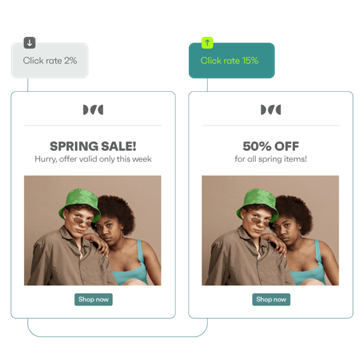
Here are common elements you can test:
-
-
- Subject line
- Email content
- Images
- Call to action buttons
-
Tip: Most email service providers include A/B testing as a feature.
6. Include a Primary Call to Action (CTA)
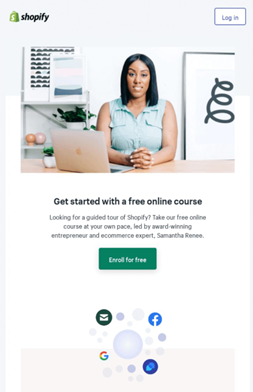
Increase your conversion rate—whether that’s more sales, inquiries, or website visits—by including a clear call to action button in your emails. A call to action is the next step you want your subscriber to take. Choose one primary call to action in your email (maximum two). It helps focus the reader’s attention on the one desired next step you’d like them to take. Too many actions can cause your reader to feel overwhelmed and leave without taking a next step.
Here are the most common calls to action:
-
- Click here to read more
- Buy now
- Visit our store
- Reserve your spot
- Make a reservation
- Sign up now
- Book now
- Click here for more info
7. Personalize Your Emails
Research shows that personalized emails receive 29% higher open rates and 41% higher click-through rates than non-personalized emails.
Personalization can be as simple as adding a subscriber’s first name in the subject line or in the email content, which helps grab their attention. Most email service providers make it simple to do this automatically.
Segmenting your list can help to ensure that people receive email content that is relevant to their specific interests and travel plans, so they are more likely to open, read and engage with it.
You can also send personalized emails based on actions a subscriber takes within your emails or even on your website. For example, if they click a link in your email to view a tour, you can follow up with a reminder to reserve or book. Or, if someone downloads a brochure from your website, you can follow up with related content that helps them plan. You can even send personalized content based on past purchases. The options are endless for sending tailored offers and emails that your subscribers will appreciate.
8. Clean Your List
An effective email marketing campaign relies on good list hygiene. Cleaning your list (also known as scrubbing your list) means removing invalid emails and inactive subscribers.
Inactive subscribers are people who have not opened or engaged with your emails in the last year. Invalid emails are from email addresses that are incorrect, misspelled or no longer working.
Removing invalid and inactive subscribers means that your content will reach people who are excited to hear from you, and will lead to higher open rates, click-through rates and conversions. It will also reduce your unsubscribe rate and spam complaints which will have a positive impact on how and where your emails get delivered.
Make it a habit to clean your subscriber list once a season or every 12 months.
9. Review Results
Email metrics are the best way to understand which of your emails are being opened and whether your customers are converting. It will also let you know what actions you can take to improve.
Email marketing has proven time and time again to be a cost-effective marketing tool for businesses of all sizes. Following these simple email marketing best practices will help you build a relationship with your subscribers, ultimately leading to more bookings and sales for your business.
Last updated: August, 2024