The Foundations of Experience Development
The term “experience” is widely used, but what exactly does it mean when we talk about tourism?
The dictionary defines an experience as “something personally encountered, undergone, or lived through” (Merriam Webster, 2025). In tourism, experiences are the dynamic, subjective, and memorable outcomes that arise from meaningful interactions visitors have with local places, people, cultures, and stories.
A visitor experience includes everything a traveller encounters – both planned and unplanned – throughout their entire journey with a destination and tourism businesses. This includes:
 About This Article
Reading time: ~5 mins
Format: Article
About This Article
Reading time: ~5 mins
Format: Article
- Browsing websites and making bookings
- Exploring a new city using public transportation
- Hiking local trails or fishing in nearby lakes
- Visiting attractions and cultural sites
- Sampling regional cuisine
- Interacting with residents and learning about local culture
- Participating in seasonal activities and events
The Experience Spectrum
Tourism offerings exist along a continuous spectrum of engagement and memorability, ranging from basic products to deeply immersive experiences. This spectrum represents increasing levels of visitor engagement, emotional connection, and lasting impact:
Tourism Products
Tourism products are the diverse offerings provided by businesses and organizations, including accommodations, activities, and attractions. These are the basic components that visitors purchase, use, or participate in – the “what” of tourism.
Example: A hiking trail in Golden Ears Park with marked paths and basic signage.
Visitor Experiences
A visitor experience refers to all the ways a traveller interacts with a destination – from pre-trip research to post-trip memories. It’s the complete journey with your destination and business.
Example: A self-guided exploration of Golden Ears Park, following trail maps and taking photos of scenic viewpoints.
Immersive Tourism Experiences
An immersive tourism experience takes the visitor experience to the next level by inspiring guests to connect with your business and destination in a deeper, more meaningful way. It goes beyond simply seeing what’s there, to actively engaging all senses, enhancing emotional connections, and creating lasting memories.
Example: A guided interpretive hike through Golden Ears Park with a local naturalist who shares Indigenous knowledge of traditional plant uses and provides a locally-sourced picnic overlooking Alouette Lake.
Packaging vs an Experience
The term “packaging” is also widely used in tourism. What’s the difference between a package and an experience?
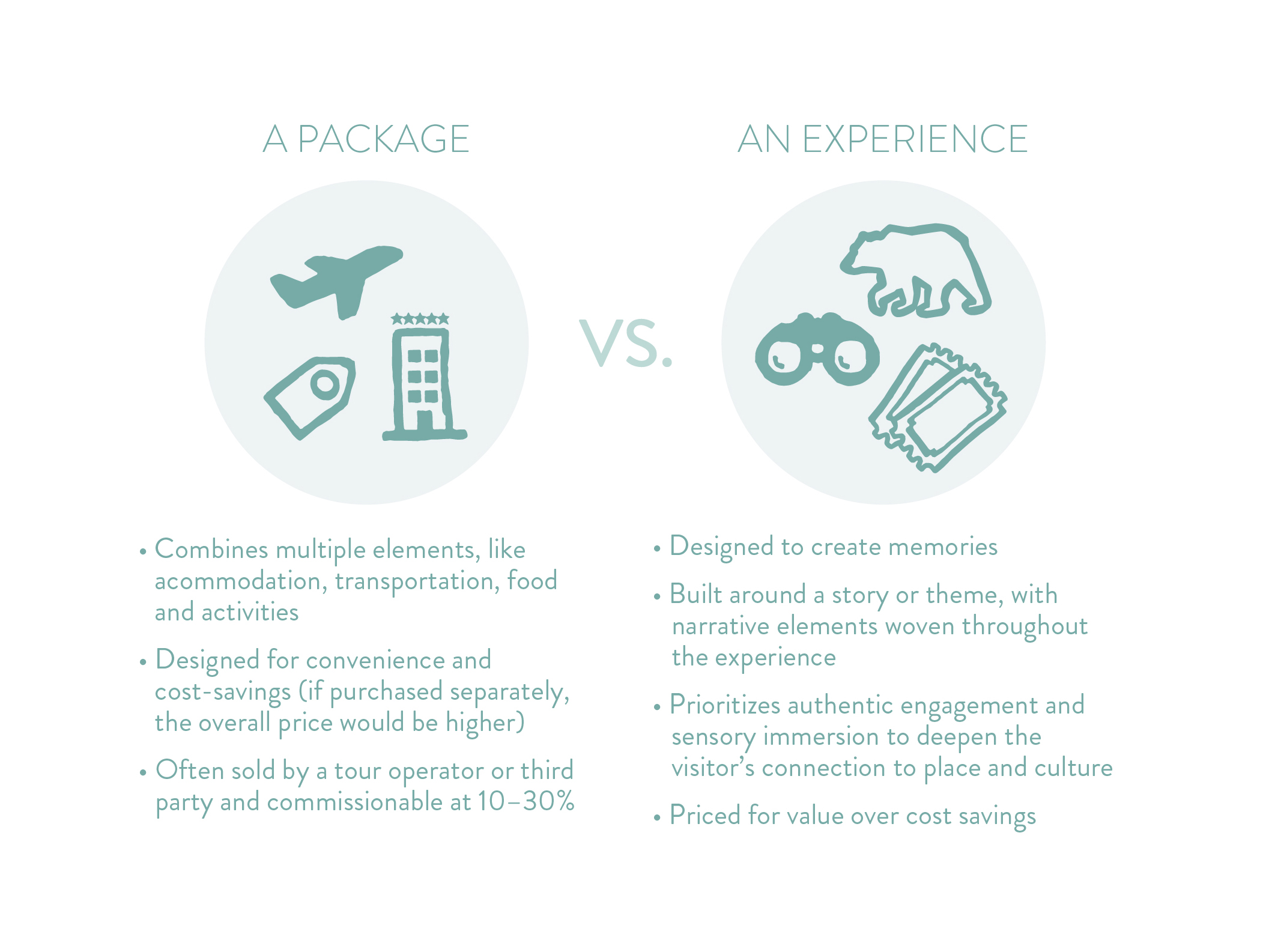
A Package:
-
- Combines multiple elements like accommodation, transportation, food and activities, typically for a single price
- Designed for convenience and cost-savings (if purchased separately, the overall price is higher)
- Often sold by a tour operator or third party and commissionable at 10-30%
An Experience:
-
- Designed to create memories
- Built around a story or theme, with narrative elements woven throughout the experience
- Prioritizes authentic engagement and sensory immersion to deepen visitor connection to place and culture
- Priced for value over cost savings
The Value of Experiential Tourism
Recent studies reveal that travellers are increasingly seeking experiences “that give them a taste of local culture and let them explore hidden gems that friends back home don’t know about,” and they’re willing to pay a premium for these authentic connections (Global Travel Trends Report, 2023).
In British Columbia, this trend offers significant opportunities:
- Experiential tourism can extend visitor stays and increase spending
- Immersive experiences create more meaningful connections for visitors to destinations in BC
- Travellers seeking authentic experiences often explore beyond well-known places or seasons, providing new opportunities for tourism businesses and destinations
- These experiences can be marketed based on the unique value they offer rather than price discounts
Experience Development Approaches
Experience Development is a systematic approach to creating new immersive tourism experiences or enhancing existing experiences. While there are endless possibilities, there are fundamentally three development options:
1. Create a new experience targeted at attracting new or returning travellers to your business.
Example: A kayak tour operator adding a “Paddle with Marine Biologists” experience focusing on ocean conservation.
2. Adapt an existing offer to appeal to a new type of traveller
Example: A remote fishing lodge transforming traditional fishing trips into “Catch, Learn, Cook” culinary experiences that attract food-focused travellers.
3. Layer on enhancements geared to your current travellers.
Example: A guest ranch adding storytelling sessions to the trail rides they offer, with local Knowledge Keepers to create deeper cultural connections..
The Experience Design Process
Experience design involves eight iterative steps, with continuous learning, listening, and adapting throughout the development process:
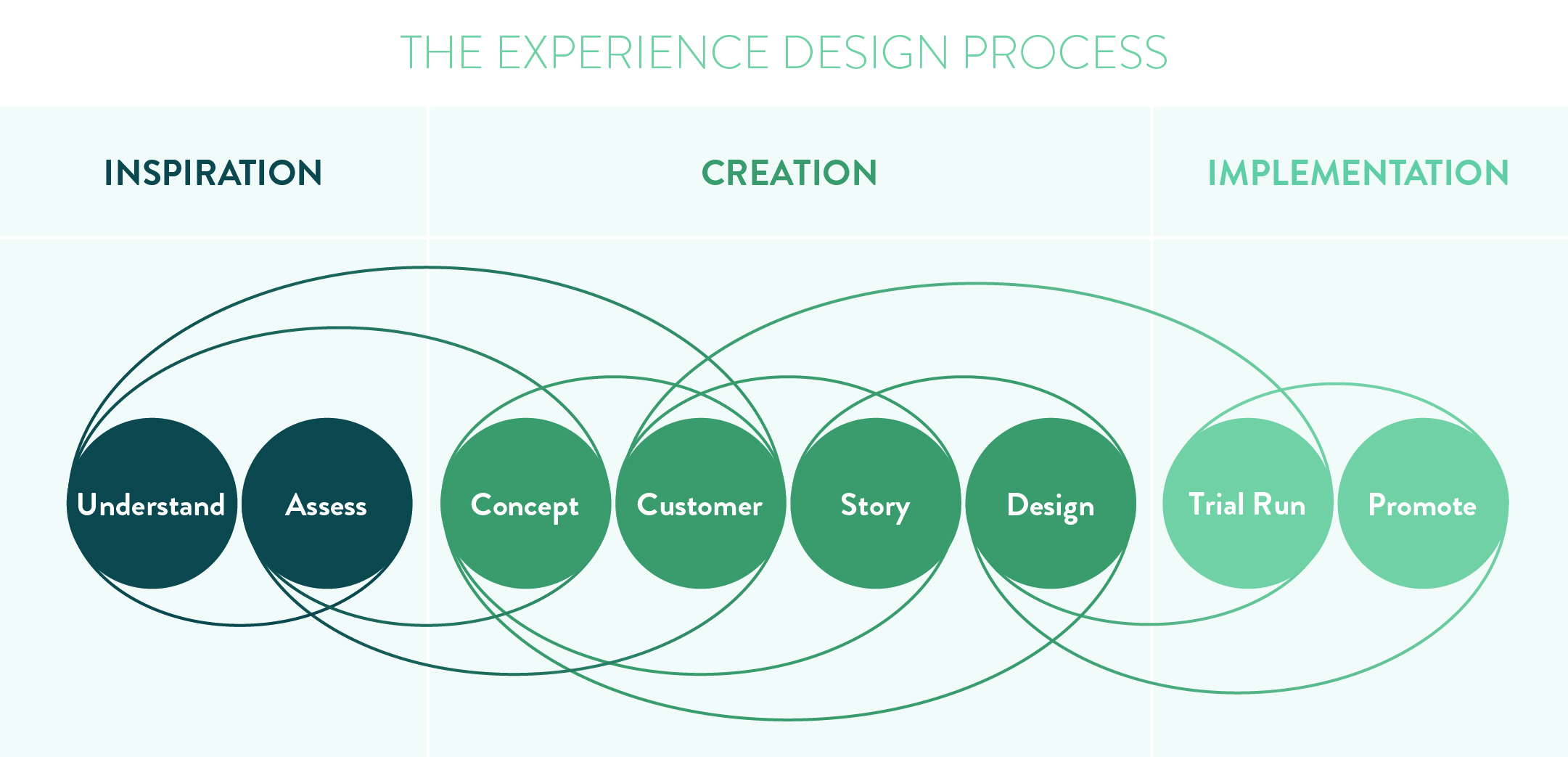
PHASE 1: INSPIRATION
A business is inspired to make a change in response to new opportunities emerging from the external environment, evolving markets, and their customers.
1. UNDERSTAND: Examine external market opportunities and customer needs to identify focus areas for developing new products, services, or experiences.
2. ASSESS: Review internal and external assets, resources, capacity, and risks associated with developing a new business opportunity.
PHASE 2: CREATION
The creative process of generating and developing new ideas in response to the opportunities emerging from the Inspiration phase.
3, CONCEPT: Develop a high-level description of the new or enhanced tourism offer, considering the value and benefits to your business and your ability to deliver on your brand promise.
4. CUSTOMER: Clearly define who the experience is for – existing guests or a new customer segment you want to attract.
5. STORY: Create the connection between experience development and marketing. Develop stories that educate, inspire, entertain, or create intrigue, making your experience uniquely and authentically yours.
6. DESIGN: Plan the pre-, during, and post-trip visitor elements and sequence of events to provide a seamless visitor experience.
PHASE 3: IMPLEMENTATION
The process of testing the new experience and gathering feedback before launching and investing in promotions.
7. TRIAL RUN: Test your experience with your target audience and individuals who can provide critical feedback before going to market.
8. PROMOTE: Select appropriate sales channels, promotional tools, and outlets to reach your target audience and close the sale.
Developing Experiences in BC
There are extraordinary natural and cultural assets in BC that provide the foundation for world-class tourism experiences. The diverse landscapes, rich Indigenous cultures, vibrant communities, and distinctive areas all offer unique opportunities for experience development.
Destination BC’s Iconics strategy identifies seven distinct travel routes and places that help differentiate BC on the world stage and shift when and how people travel in BC by attracting responsible travellers to explore more places, at more times of the year. When developing new experiences, consider how your offerings can align with and enhance these iconic destinations and the Super, Natural British Columbia brand.
The most successful tourism experiences in BC are those that:
-
- Authentically reflect the character of their location
- Incorporate diverse perspectives, voices, and cultures
- Connect visitors with local communities in meaningful ways
- Promote sustainable and responsible tourism practices
- Create opportunities for deeper understanding of the natural and cultural heritage in BC
Getting Started
Are you ready to begin developing new experiences for your tourism business? Consider these questions:
- What makes your area or business unique?
- Which stories or aspects of your place could create emotional connections with visitors?
- How might you transform an existing product into a more immersive experience?
- Which potential partners could help enhance your visitor experience?
- What opportunities exist to create experiences during shoulder or off-peak seasons?
To learn more, read 4 Principles of Creating an Immersive, Remarkable Visitor Experience.
Last updated: September, 2025