BC’s Destination Development Strategies
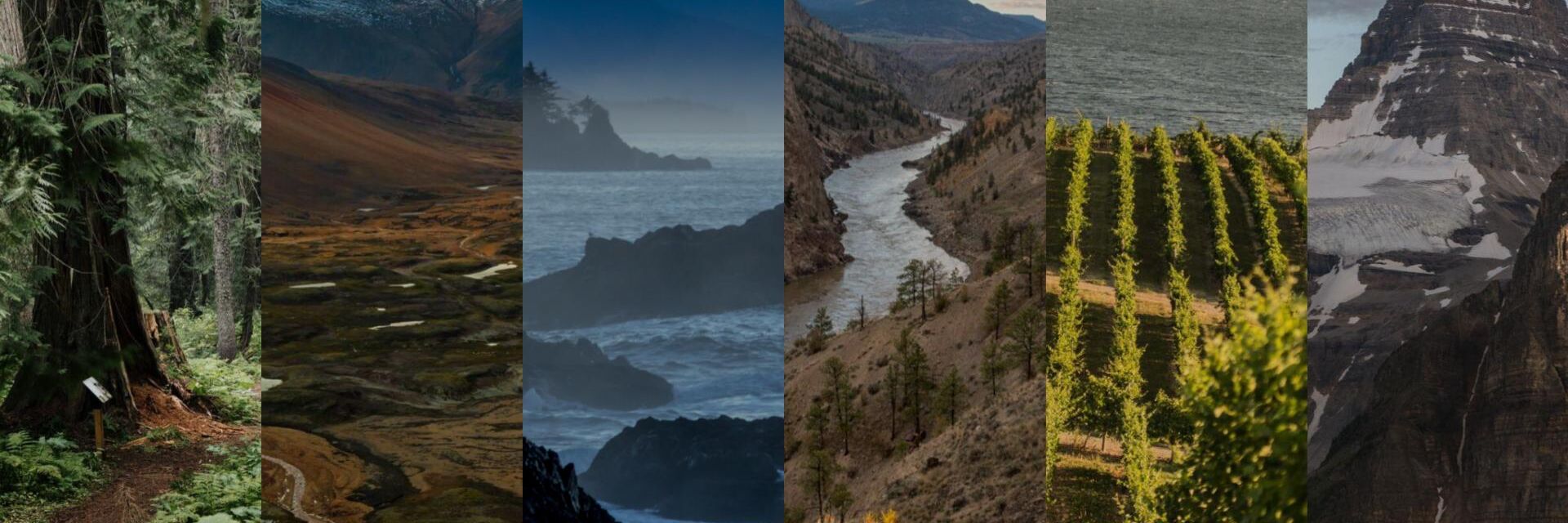
Developing Iconic Experiences in British Columbia
Destination development strategies guide long-term, sustainable tourism growth across British Columbia.
Each of BC’s six destination brands is supported by a dedicated destination development strategy that identifies priorities for experience development, infrastructure, and future investment. These strategies help strengthen the tourism landscape across the province.
Grounded in community input and aligned with BC’s global destination positioning, together they provide a clear direction for industry, businesses, and communities.
A Strategy for Each Destination Brand
Each destination brand has a corresponding destination development strategy:
- Rainforest to Rockies
- The Great Wilderness
- Valleys & Vineyards
- Birthplace of Adventure
- The Infinite Coast
- Nature’s Heartland
Collectively, these strategies strengthen BC’s global competitiveness and ensure tourism growth reflects local priorities. They highlight experience and infrastructure needs, guide strategic investment, and support long-term sustainability. By outlining where to focus, they bring the tourism sector and communities together around shared goals.
Community Look Up Tool
Discover which destination development strategy relates to your community by using our Community Look Up Tool.
Search Results
Links to the Destination Development strategies for the relevant planning area(s):
Columbia Valley
The planning area lies between the Purcell Mountain Range to the west and the Canadian Rockies to the east, and includes Columbia Lake, Lake Windermere, the Columbia Wetlands, and the Columbia River as well as Kootenay National Park. Geographically, the Valley extends some 102 kilometers from the community of Spillimacheen in the north to Canal Flats in the south and includes areas of the Regional District of East Kootenay.
West Kootenay & Revelstoke
The planning area stretches from Rossland, Trail, and Castlegar in the west to Revelstoke in the north and Creston in the east. The southern boundary is the US border. It includes the communities of Revelstoke, Nakusp, New Denver, Silverton, Slocan, Kaslo, Creston, Nelson, Salmo, Montrose, Fruitvale, Warfield, and all areas of the Regional District of Central Kootenay, and areas of the Regional District of Kootenay Boundary and parts of the Columbia Shuswap Regional District.
South Central Island
The planning area includes the entirety of three regional districts, Alberni-Clayoquot, Nanaimo and Cowichan, as well as the Southern Gulf Islands, which form part of the Capital Regional District.
North Island
The planning area encompasses 41,043 square kilometers of the Mount Waddington, Strathcona and Comox Valley Regional Districts. The main areas driving tourism are Strathcona Provincial Park, Comox, Campbell River, and Port Hardy.
Greater Victoria
The planning area encompasses all of the Capital Regional District (CRD) which includes the Saanich Peninsula in the east, to the Malahat in the north and on to Port Renfrew in the west and does not include the Gulf Islands.
Sunshine Coast
The planning area stretches from northwest of Langdale along 180km of land to north of Lund to Bliss Landing, Desolation Sound and waterways to the northern tip of Toba Inlet. It encompasses the jurisdictions of the Sunshine Coast Regional District, the Powell River Regional District and includes the following islands: Gambier, Keats, Nelson, Hardy, Thormanby, Texada, Lasqueti, Harwood, and Savary.
Fraser Valley
The planning area includes Langley and Pitt Meadows to the west, Hope and Manning Park to the east, the US border to the south, the tops of Golden Ears Provincial Park and Harrison Lake to the north, and all parts in between. It also includes the Fraser Valley Regional District and parts of Metro Vancouver.
Metro Vancouver
The planning area includes Langley and Maple Ridge to the east, Vancouver to the west, Delta and Surrey (and the US border) to the south, the North Shore and Lions Bay to the north, and all parts in between. Communities in Metro Vancouver coincide with those within the Metro Vancouver Regional District.
Highway 3 Corridor
This planning area (including Highway 3A, 3B, and 43) stretches east to west from Hope along 838 km of mountainous roads to the Alberta border. The Highway 3 Corridor has concluded their Destination Development Strategy and are working towards implementation.
Highway 1 Corridor
The planning area stretches from the Alberta border in the east to Kamloops/Savona in the west and includes Yoho National Park, Glacier National Park, and Revelstoke National Park. This portion of the Trans-Canada Highway extends some 550 kilometers and includes the Village of Field, the Town of Golden, the City of Revelstoke, the District of Sicamous, the City of Salmon Arm, the Village of Chase, the City of Kamloops, and Sun Peaks Mountain Resort Municipality.
Shuswap-North Okanagan
The planning area encompasses the Regional District of North Okanagan, areas of the Columbia Shuswap Regional District and, the Village of Chase in the Thompson Nicola Regional District. The key communities include Salmon Arm, Sicamous and Chase along Highway 1; Falkland on Highway 97, and Enderby, Armstrong, Vernon, Coldstream and Lumby in the North Okanagan.
Okanagan Valley
The planning area encompasses the Regional District of Central Okanagan, Similkameen Regional District, and the Regional District of Kootenay Boundary. Municipalities include Lake Country, Kelowna, West Kelowna, Peachland, Summerland, Penticton, Oliver, Keremeos, and Osoyoos.
North Thompson & Nicola Valleys
The planning area encompasses a portion of the Regional District of Fraser-Fort George and from Porcupine Meadows Park southwest to Savona, and the remainder south of the area, just south of Kamloops, along 5A until Sun Peaks in the east, with communities along Highway 1 of the Thompson-Nicola Regional District (TNRD). Municipalities include McBride, Valemount, Clearwater, Barriere, Sun Peaks, Kamloops, Logan Lake and Merritt.
Northwestern BC
The planning area spans from Tatshenshini-Alsek Park at the Alaska-Yukon-BC border south to the start of Highway 37 and west from Prince Rupert to the area east of Valemount.
Northeastern BC
The planning area spans from the northern tip of the BC portion of the Alaska Highway (Highway 97) to the Yukon-BC border, south to Prince George and from the western edge of the Muskwa Kechika Management area and east to the Alberta border.
Haida Gwaii
The planning area is located approximately 130 km off the BC coast and 640 km north of Vancouver and is accessible by air and sea. The closest mainland transportation access is from Prince Rupert via BC Ferries. Haida Gwaii encompasses over 200 islands, totaling 3750 square miles, or 1,000,000 hectares with two developed islands.
No strategy has been developed yet. Please get in touch with Northern BC Tourism staff for further information.
Sea-to-Sky Corridor
The planning area encompasses all of the North Shore of Metro Vancouver Regional District and the Squamish-Lillooet Regional District. This estimated 260-kilometre-long area includes North Vancouver, and Burrard Inlet through West Vancouver to Horseshoe Bay, and then north where the route meets the Howe Sound coastline to Squamish. There the route continues inland through the Coast Mountain Range. The Sea-to-Sky Corridor includes all communities and remote areas in between North Vancouver and Lillooet, including Bowen Island and the Bridge River Valley, north of Pemberton.
Interlakes
The planning area, which encompasses the main corridor of Highway 24, and its junction with Highways 97 and 5, stretches across the Bonaparte Plateau to the North Thompson Valley, including Wells Gray Provincial Park and the communities of Barriere and Clearwater. The western side of the area is bounded by a portion of Highway 97 to include the area between 70 Mile House and 100 Mile House. To the south the area includes Bonaparte Lake. To the north, the boundary is Canim-Hendrix Rd, Canim Lake, Crooked Lake, Azure Lake and the northern boundary of Wells Gray Provincial Park.
Gold Rush Trail
The planning area is a 750km corridor from New Westminster to Stone Creek and Barkerville, following the Fraser Canyon and Fraser River that follows traditional Indigenous trading routes utilized during the fur trade and expanded through the gold rushes of 1858-1862.
Chilcotin Central Coast
The planning area which encompasses the area west of the Fraser River stretching across the Chilcotin Plateau to the central coast, north to include Hartley Bay, Entiako, Finger-Tatuk and Fraser River Provincial Park, and south to include Bute Inlet, the Homathko Icefield and Big Creek Provincial Park.
Explore BC's Destination Development Strategies
Frequently Asked Questions
Is the Super, Natural British Columbia brand being retired? How do the new destination brands fit with the provincial brand?
Super, Natural British Columbia will continue to play a critical role in building awareness and demand for tourism in BC. Super, Natural BC is the overarching parent brand for our global marketing efforts; it sets the tone, values, and shared story that unite all of the BC destination brands and acts as the guiding force for how BC shows up in international markets. The new destination brands join Super, Natural BC as our globally compelling, competitively positioned reasons to visit BC.
Do the Iconics replace the current tourism regions (Regional DMOs)?
No; the new destination brands are consumer-facing brands, designed to help international travellers easily and quickly understand the offering for British Columbia. They do not reflect a change in current administrative boundaries for the BC tourism industry.
The regional DMOs are key partners in this project and have helped to create the brands and play a critical role in implementing them moving forward. Some RDMOs support several of the new destination brands.
How will the Invest in Iconics Strategy benefit the tourism industry in BC?
The tourism industry in BC will benefit from this strategy through increased global demand for more places/seasons in British Columbia. By turning the immense geography and experiential diversity in BC into clear, compelling options that simplify discovery and planning, the new family of destination brands will help travellers more easily understand and choose more places in BC and across all seasons, ultimately ensuring BC can compete and win against global destinations, and spreading the benefits of tourism throughout the province.
Benefits for tourism businesses of increased global demand for BC could include:
- More visitor bookings – Clearer value proposition and global marketing reach brings more qualified leads to businesses
- Extended operating seasons – Increased shoulder and off-peak demand allows businesses to operate longer and generate increased and more consistent annual revenue
- Product expansion opportunities – Increased demand for BC creates potential to develop new offerings or enhance existing experiences
- Access to global marketing power through Destination BC’s international reach and collective marketing impact, that businesses couldn’t achieve on their own
Benefits for communities of increased global demand for BC could include:
- Attracting responsible travellers who stay longer, spend more, travel further afield and help sustain year-round economic activity.
How do I get involved? Are there tools or materials I can use to support the strategy?
The best place for you to start is the industry toolkits—one for each destination brand. Inside these toolkits you’ll find practical tools, messaging frameworks, and creative assets that make it simple to weave the brands into what you’re already doing. While Destination BC will be focused on international markets, industry can use the assets and tools in their domestic marketing, too.
The toolkits, alongside a number of other great resources, can be found at DestinationBC.ca/Brands and in Destination BC’s Learning Centre.
Which markets will Destination BC be promoting the Iconic place and route brands in?
Super, Natural British Columbia and the iconic destination brands will be promoted through a mix of consumer-direct, travel trade, and travel media activities in all of Destination BC’s key global markets: USA, UK, Germany, Australia, China, and Mexico.
Subscribe to Directions, Destination BC’s e-newsletter, for the latest news and program updates.
Receive updates, research and news you can use.