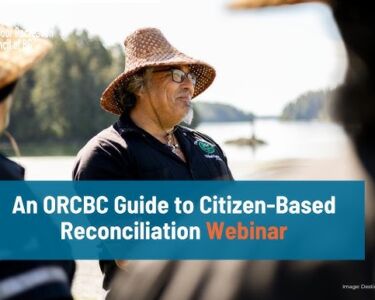
An ORCBC Guide to Citizen-Based Reconciliation Webinar


What does reconciliation look like in practice on the land and water across British Columbia?
That question was at the centre of a recent webinar hosted by the Outdoor Recreation Council of BC (ORCBC). The ORCBC Guide to Citizen-Based Reconciliation webinar brought together panelists from across the province to share real-world examples of collaboration between First Nations and outdoor recreation organizations.
The session focused on how relationship-building can lead to meaningful and lasting change across BC’s outdoor recreation sector.
Citizen-Based Reconciliation
The webinar overviewed the concept of Citizen-Based Reconciliation, a grassroots approach grounded in respectful, person-to-person relationships. The approach encourages individuals and organizations to engage with First Nations in ways that are collaborative and rooted in shared interests.
A key message throughout the session was that reconciliation is shaped through everyday actions, conversations, and a willingness to build trust over time.
BC-Based Examples
Speakers shared examples that demonstrate how this approach is taking shape in different parts of BC.
On the Fraser River, Rod Clapton and Rod Peters spoke about the Lower Fraser River Collaborative Table, which brought together 23 First Nations, recreational fishing organizations, and commercial fishers to discuss what fishing on the Fraser River could look like for future generations. Honest, face-to-face conversations helped build relationships between groups with historically different perspectives, creating space for more open dialogue and common ground. Through these conversations, participants identified a shared goal of respectful, conflict-free fishing and healthy fisheries. Over time, the focus expanded beyond access to include conservation, fisheries management, and sustainable harvesting, all grounded in relationship building.
Norman Marcy from BC Marine Trails (BCMT) shared the organization’s use of concurrence, compromise, and listening, to seek permission from First Nations to use recreational sites. BCMT works directly with First Nations to remove sensitive sites from recreational paddling maps and steer recreational use to accepted campsites, rest areas, and launches. This reflects a more respectful approach to access.
Another example came from the Papt Ku Gwenis: Gwenis Forever Project. Morris Prosser and Liam Ragan explained how BC Nature and the Lillooet Naturalist Society are working together with the Tsal’alh First Nation to monitor the spawning of Gwenis, a unique black Kokanee salmon, with the goal of restoring populations of this important food fish.
Learn More
Through the webinar, ORCBC has developed a recommended framework and eight guiding principles centred around Citizen-Based Reconciliation, encouraging members and individuals to engage in reconciliation at a grassroots, person-to-person level.
Watch the full webinar recording and find related resources, including the eight guiding principles, on the ORCBC website.