
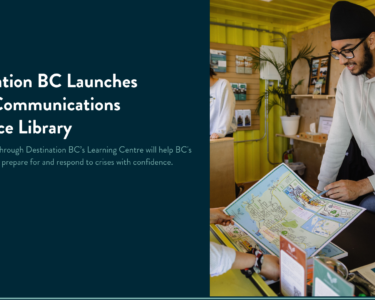
New Crisis Communications Resource Library Helps BC Tourism Organizations Build Readiness


A crisis rarely arrives with warning. Whether it’s a weather event affecting visitor travel, a significant business disruption, a reputational issue, or an unexpected operational challenge, how an organization communicates in the first hours and days can shape outcomes long after the situation has passed.
To help tourism organizations strengthen their crisis readiness, Destination BC has launched a new Crisis Communications Resource Library through its Learning Centre. The free, self-paced resource hub provides practical guidance, templates, and tools to help organizations create, update, and implement a crisis communications plan.
Available online 24/7, the series is designed for tourism businesses, destination management organizations, sector associations, and other tourism organizations across British Columbia. Together, the resources support organizations in planning, preparing, responding, and evaluating their communications before, during, and after a crisis.
Crises can take many forms. While emergencies such as wildfires, floods, and public safety events have the potential to impact the visitor economy, organizations may also face operational disruptions, staff conduct concerns, governance challenges, cyber incidents, or other situations that require timely, coordinated communications. Having a crisis communications plan in place helps organizations respond quickly, provide accurate information to visitors and interest holders, and maintain trust when it matters most.
The Crisis Communications Resource Library guides participants through every stage of crisis communications planning and response, including:
- Assessing organizational crisis readiness
- Building and organizing a crisis communications team
- Identifying key audiences and interest holder groups
- Preparing communications channels and processes
- Responding effectively during a crisis
- Evaluating and strengthening post-crisis response efforts
The series includes practical worksheets, templates, toolkits, and case studies that organizations can work through at their own pace, making it easier to apply learning directly to their operations and build a crisis communications plan tailored to their needs.
Building Industry Capacity Through Tourism Emergency Management
The new learning series builds on Destination BC’s ongoing work as a member of British Columbia’s Tourism Emergency Management Committee (TEMC), a collaborative partnership of tourism industry and government organizations dedicated to supporting visitor safety, business viability, and British Columbia’s reputation as a safe and welcoming destination.
While the TEMC focuses on coordinated emergency preparedness, response, and recovery across the provincial tourism sector, strong crisis communications planning is a foundational capability that helps organizations navigate a wide range of events. Whether responding to a large-scale emergency, managing an operational disruption, or addressing an issue that could affect public trust and organizational reputation, effective communications can help organizations make informed decisions, coordinate action, and communicate with confidence.
As part of its role within the TEMC, Destination BC leads initiatives that support the long-term reputation of British Columbia as a tourism destination. This includes planning and coordinating communications, delivering training to industry partners, conducting research, and collaborating with provincial emergency management agencies during significant events.
The Crisis Communications Resource Library is one more way Destination BC is helping strengthen tourism crisis preparedness across British Columbia while supporting visitor confidence and destination reputation.
Supporting a Resilient Visitor Economy
A strong visitor economy depends on resilient businesses, prepared destinations, and trusted organizations that can communicate effectively during times of uncertainty. By equipping tourism organizations with practical crisis communications knowledge and tools, Destination BC is helping build the capacity needed to anticipate risks, respond confidently to challenges, protect organizational and destination reputation, and support visitors, communities, and interest holders when issues arise.
Through industry learning opportunities, research, collaboration, and destination development, Destination BC supports a thriving tourism industry that benefits communities throughout British Columbia. Making crisis communications training and planning resources widely accessible helps strengthen organizational resilience, improve preparedness across the tourism sector, and contribute to a stronger visitor economy for the province.
Learn more: