

Emergency Preparedness Resources for Tourism Operators


Emergencies can happen at any time, but preparation helps us support visitors, communities, and businesses with confidence.
As tourism operators and partners, we’re often one of the first places visitors turn for information. Whether it’s a wildfire, weather event, road closure, or another disruption, the actions we take before and during an emergency can have a direct impact on visitor safety and their experience.
Here are five ways tourism businesses can prepare and support visitors when it matters most:
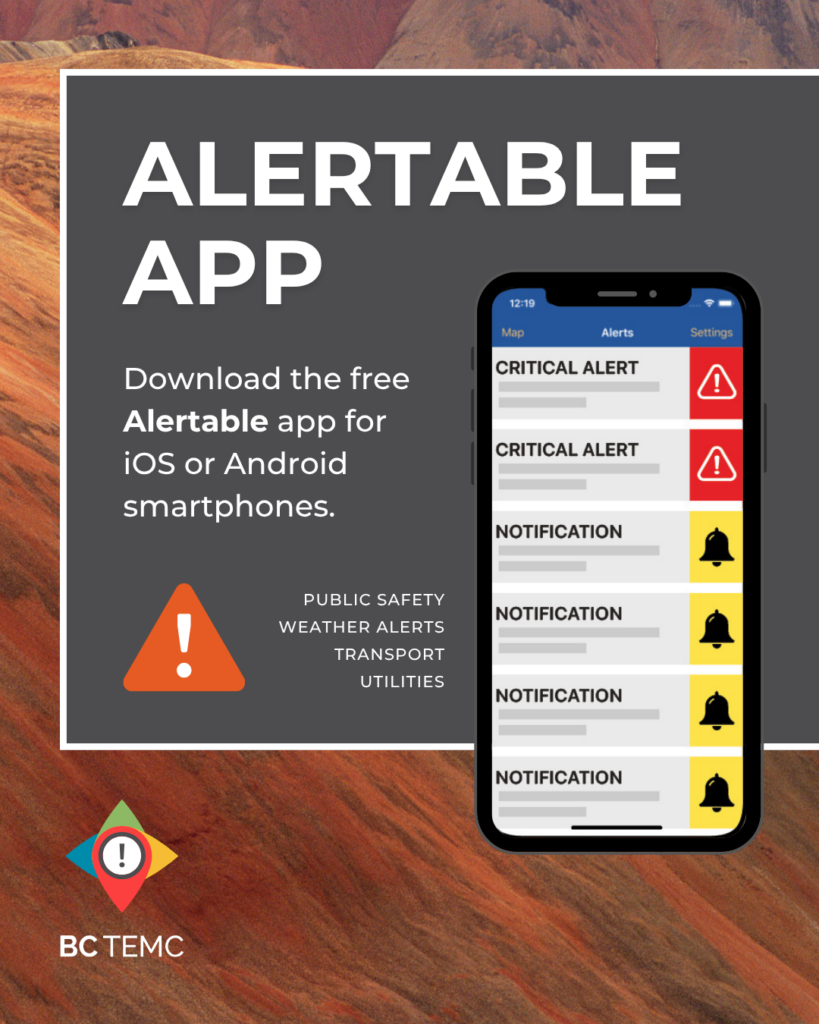
1. Download Alertable and encourage visitors to do the same.
One of the simplest ways to help visitors (and staff) stay informed is to point them toward trusted information sources before they need them. The Alertable app provides location-based emergency notifications, including evacuation alerts, road closures, hazards, and other important updates. Consider including a link in pre-arrival emails, guest information packages, visitor guides, and front desk materials so visitors know where to find reliable information throughout their stay.
Resources:
2. Share information from official sources, only.
Visitors rely on us to help them understand what’s happening, but accuracy matters. During an emergency, rumours and social media speculation can spread quickly. Bookmark official sources such as EmergencyInfoBC, DriveBC, BC Wildfire Service, and WeatherCAN, and use them as the foundation for any information you share with visitors, staff, or partners. Consistent, factual messaging helps people make informed decisions and builds trust.
Resources:
3. Make visitor safety your top priority.
Tourism businesses play an important role in helping visitors access timely, accurate information during emergencies. Consider what questions your guests might have and how you’ll answer them. Do staff know where to direct visitors for updates? Do guests know about local conditions, transportation impacts, BC’s community visitor centres, or available services? Small actions can help visitors feel supported and confident during uncertain situations.
Resources:
4. Be proactive in communicating with future visitors.
Don’t wait for guests to contact you. Reach out proactively with clear, factual updates about local conditions and what visitors can expect during their trip. If your community is operating normally, let people know. If there are impacts, explain them honestly and provide practical alternatives.
The goal isn’t to create alarm or downplay concerns. It’s to help visitors feel informed, safe, and confident about their travel plans. Reassure guests that you’re monitoring conditions, providing up-to-date information, and are there to help them have a memorable experience for all the right reasons. This kind of communication can make the difference between a cancelled trip and a visitor who arrives feeling welcomed and prepared.

5. Stay connected to your local tourism network.
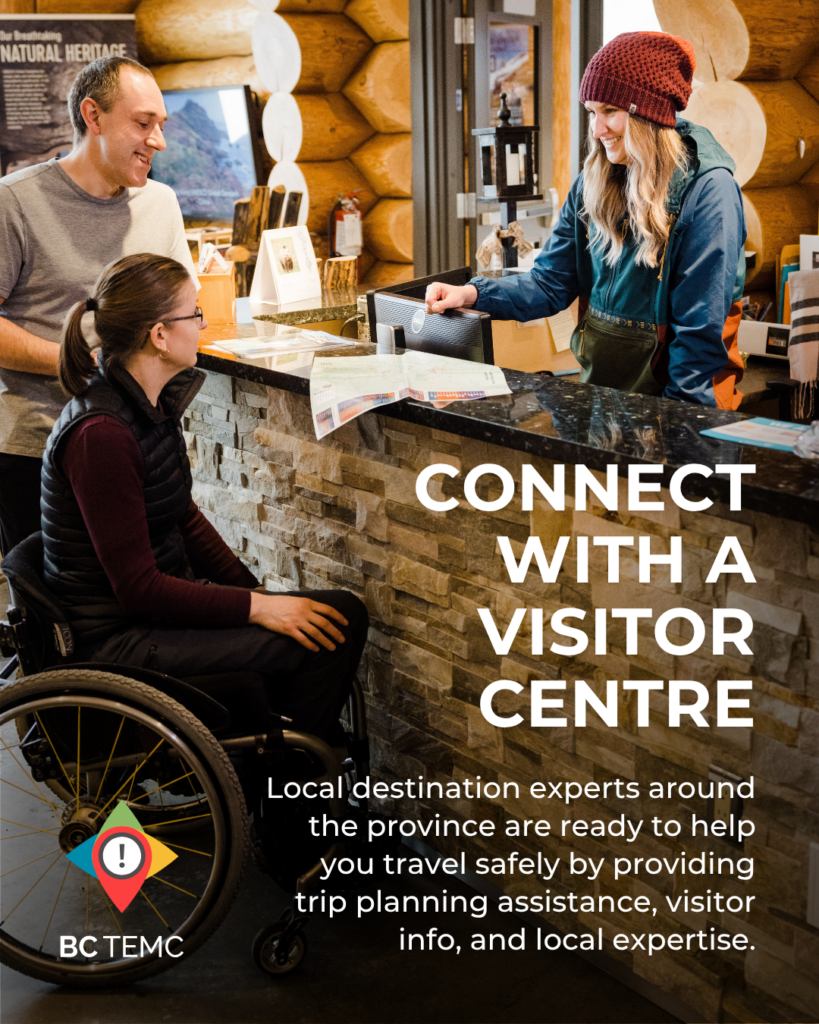
Strong local connections are one of the most valuable resources during an emergency. Check in with your local visitor centre, destination management organization (DMO), sector association, Indigenous tourism organization, or municipality to ensure your contact information is up to date and that you’re receiving emergency updates and industry communications.
Being connected helps you receive timely information, coordinate messaging, access support resources, and stay informed about what’s happening across your destination. It also helps create a more coordinated visitor experience when businesses, tourism partners, and communities are working from the same information. BC’s tourism sector partners are often contacted by first responders to lend their expertise or provide support to evacuees.
Resources:
As seasons shift, take time to review what worked, update your emergency contacts, refresh your communications plans, and identify gaps. The best emergency plan is the one you’ve already thought through before you need it.
Destination BC’s Learning Centre offers free, self-paced crisis and emergency planning resources that are available online 24/7. The hub includes practical guidance, templates, worksheets, tools, and case studies to help tourism businesses, DMOs, visitor centres, and sector organizations prepare for, respond to, and recover from emergencies and other crises.
Tourism businesses can be part of the solution during an emergency. Across British Columbia, operators have stepped forward time and again to support evacuees, first responders, and local communities by providing accommodation, transportation, meals, gathering spaces, local knowledge, and other critical services. The tourism industry’s willingness to help, adapt, and mobilize quickly is one of its defining strengths. Whether supporting visitors or neighbours in need, tourism businesses often play an important role in helping communities respond, recover, and move forward.
Access Emergency Resources for BC’s Tourism Industry: https://www.destinationbc.ca/what-we-do/destination-management/emergency-preparedness/emergency-resources-for-bcs-tourism-industry/