
Behind the Scenes: Destination BC’s Maya Lange Attends Provincial Delegation to China to Strengthen Relationships, Grow Opportunity, and Create Future Business for BC Tourism Partners


China continues to be one of British Columbia’s most important international tourism markets, and one with significant growth potential.
Forecasts indicate leisure visitation from China to BC will increase by 18% in 2026, generating nearly $590 million in visitor spending. With Approved Destination Status (ADS) restored, air connectivity continuing to recover, and strong demand for premium, experience-led travel, Destination BC is working to ensure British Columbia is well positioned to capture that growth.
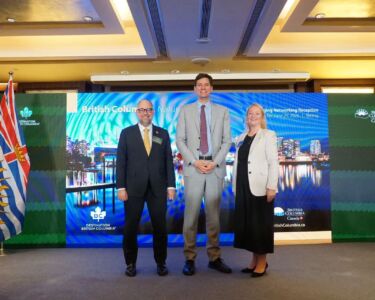
As part of Premier David Eby’s trade mission to China, Destination BC Vice President of Global Marketing, Maya Lange, joined Destination BC’s in-market China team for a week of meetings, events, and industry engagement across Beijing, Shanghai, and Guangzhou. From airline executives and travel distributors to tourism partners and government leaders, every conversation was focused on one goal: creating more opportunities for visitors to choose British Columbia.
Here’s a look inside the mission from our Vice President of Global Marketing, Maya Lange, who has shared her personal reflections.
Beyond the Itinerary: Maya Lange’s Reflections
Beijing – Shanghai – Guangzhou, June 29 – July 3
I’ve had a few days now to think about the Premier’s trip last week and the honest truth is I’m still processing how much has changed! This was my second time going to China this year after a nine-year hiatus, and it reminded me (again and again) that just when you think you’ve got a market figured out, it shows you otherwise. I first came here in 2015, and the country I saw this year barely resembles the one I remember from 11 years ago. The pace of life, the way technology is woven into every part of the traveller journey (and daily life), the sophistication of the travel trade, the independence of the Chinese traveller… it’s a different country to sell BC into now, and that’s exciting.
The air access story is finally turning a corner
Our meetings and conversations with Air Canada, Air China, and China Eastern Airlines in Beijing and Shanghai were the real foundation of the week, and they left me more optimistic than I’ve felt in years about our connectivity with this market. BC is currently served by 26 direct weekly flights from mainland China, plus additional service out of Hong Kong and Taiwan – and hearing directly from the carriers about where demand is rebuilding gave me a much clearer picture of the road ahead. Air China’s continued direct Beijing–Vancouver service, and China Eastern’s interest in strengthening the Shanghai–Vancouver route, tell me the airlines see the same opportunity we do. Every one of these conversations reinforces something I’ve written about before: tourism growth doesn’t happen without the infrastructure of air access underneath it. You can have the most beautiful destination brand in the world, but if people can’t get there easily, none of it matters.
Luxury and customized travel is where the growth is
The meetings with 6renyou in Beijing and 8 Continents Travel in Shanghai were, for me, the most energizing part of the week. These aren’t mass-market operators, they’re premium, small-group specialists whose clients want depth, not checklists. What struck me most was how closely their read on the Chinese luxury traveller matches our own research: today’s high-value travellers from China are chasing authentic nature, Indigenous cultural experiences, wellness, and genuine local connection. That is, almost word for word, BC’s strength. It’s rare that a market’s emerging preferences line up this cleanly with what a destination already does well, and it made me even more confident in the direction of our Iconics strategy. Using brands like Rainforest to Rockies, Valleys & Vineyards, and The Infinite Coast to pull travellers into the rest of the province.
Investment conversations that think beyond one season
My meeting with Justin Downes at Axis Leisure was a good reminder that growing this market isn’t only about marketing, it’s about building product and capacity too. Talking through mountain and resort investment opportunities underscored how tourism development, done right, is a long game: the relationships and capital that get built now are what allow us to actually deliver on the demand we’re generating in market. It’s the piece of this work that doesn’t show up in a reception speech, but it’s just as important as anything we said on stage.
Zuzuche and the rise of the independent traveller
The final stop in Guangzhou, with Zuzuche, China’s largest self-drive platform, was a fascinating way to close out the business meetings. It’s a clear signal of where a segment of the Chinese traveller is heading – away from rigid, fully escorted itineraries and toward independent, self-directed road trips. For a province built on driving routes and incredible vistas, that’s a real opportunity. It’s also, I think, evidence of the same maturing, more confident traveller I saw everywhere on this trip: someone who wants the freedom to explore BC on their own terms, at their own pace, off the main highway.
Tying it back
I wrote a while back about how tourism is often seen as the outcome of strong destination marketing, when really it’s the outcome of strong relationships: with airlines, with trade partners, with investors, with government. This week was that thesis in action. None of the growth we’re chasing in this market happens from a campaign alone; it happens because Destination BC and Team BC show up, in person, year after year, and keep investing in these partnerships. That’s also what I took away from our April mission earlier this year: the work in China isn’t a single trip, it’s a continuum, and our in-market team carries it forward between visits.
Standing in front of BC’s business and government partners at the receptions in Beijing and Shanghai, alongside Premier Eby and Minister Farnworth, talking about the return of Approved Destination Status, our improving air access, and the momentum FIFA World Cup 26™ is going to bring – it was a good moment to feel how far this relationship has come, and how much runway is still ahead of it.
Second visit in 2026 and same lesson: this is an ever-evolving market. But every trip, I understand it a little better, and I leave more convinced that British Columbia has exactly what this next generation of Chinese travellers is looking for.
-Maya Lange
Why This Matters:
Relationships with airlines, travel distributors, and industry leaders help ensure BC remains competitive in one of the world’s largest outbound travel markets. Those partnerships ultimately translate into increased visitation, longer stays, and greater economic benefits for tourism businesses throughout the province.
Luxury and customized travel continues to grow rapidly in China. Building relationships with premium travel advisors helps position BC to attract high-value visitors who stay longer, spend more, and explore more of the province.
Looking ahead
While the meetings and events may have concluded, the work continues.
The relationships strengthened during this mission will support Destination BC’s ongoing marketing and travel trade partnerships throughout the year. Combined with the expertise of Destination BC’s in-market team in China, these efforts help ensure British Columbia remains top of mind as international travel continues to grow.
For tourism businesses across BC, that work means more than meetings. It means creating future demand, encouraging longer stays, expanding travel beyond traditional gateways, and helping deliver sustainable tourism growth across the province.